
When listing your home in Forsyth County, Dawson County, or Lake Lanier, it's natural to want the absolute highest return on your investment.
It’s not uncommon for sellers operating in today's market to believe in a common strategy: "Let’s price it high just to see what happens. We can always come down later, and it leaves us room to negotiate."
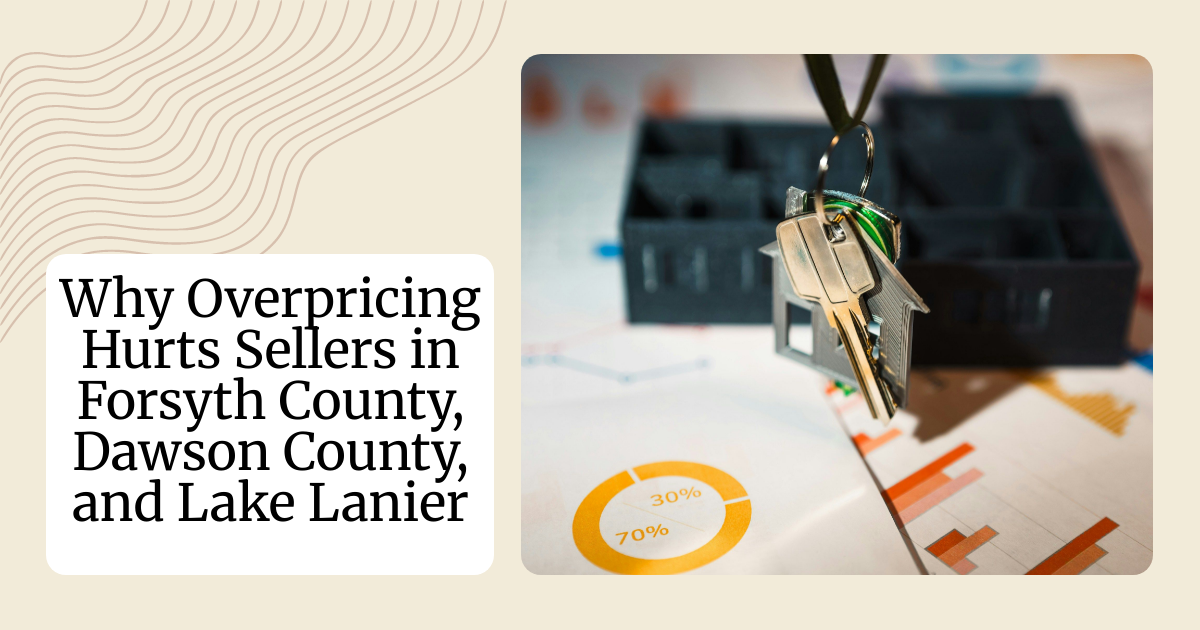
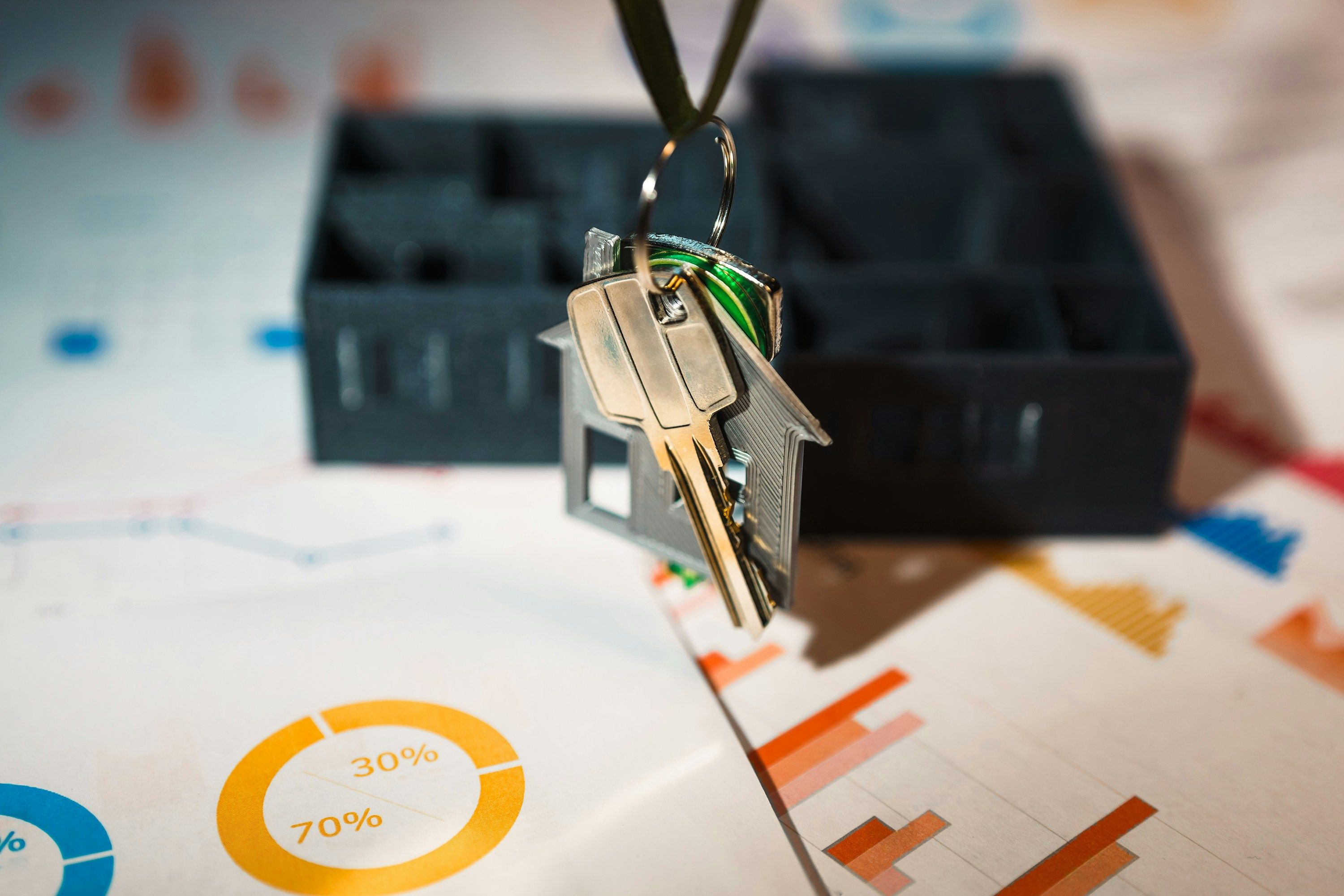
That reasoning is easy to understand, but it often works against sellers. Pricing a house too high triggers a chain reaction that costs time, visibility, and cold, hard cash. In an uneven market, overpricing from the outset rarely yields a higher sales price. Instead, it systematically reduces your net proceeds.
Below we explain what overpricing can cost a seller.
1. The Search Bracket Filter: Getting Erased Before Buyers Even See You
Most buyers begin online with strict price ranges, not open-ended browsing. You want to be listed where the right buyers are actively looking.
Today’s real estate buyers don’t browse aimlessly. They use online searches and set rigid search parameters based on price brackets. These brackets typically move in increments of $25,000 or $50,000 (e.g., $450,000 to $500,000).
When you choose an aspirational price, you inadvertently shift your home into an entirely different tier of competition.
If your home’s true market value is $490,000, but you list it at $515,000 "to leave room for negotiation," you drop off the radar of buyers looking under $500,000.
These are the exact buyers who would see your home as a premium, top-tier option.
Instead, your home is now competing against properties that are legitimately worth $525,000.
Compared to them, your home may look smaller, less updated, or poorly located, causing buyers to pass it over entirely.
Does overpricing hurt a home sale? Yes, because it makes your listing invisible to its ideal audience from day one.
2. The Psychology of Days on Market: The "What's Wrong With It?" Effect
Listings get their most interest right away. The sooner buyers see the property, the better your chances of an attractive offer.
Real estate moves on momentum. The first 14 to 21 days a listing is live represent its peak visibility and highest emotional leverage.
Buyers look for the "New Listing" tag, and we agents blast the home to our active client databases.
When a home sits past this golden window without receiving an offer, buyer psychology shifts.
Every week your home remains on the market changes how buyers perceive it. Fairly or unfairly, they begin to assume the property has a hidden defect. They wonder if there are structural issues, bad neighbors, or unpermitted work.
Even if you change the price to drop the listing back down to fair market value, the damage to buyer perception is already done. You are no longer a fresh, exciting opportunity; you are a stale listing that other buyers have rejected.
3. The Compounding Math of Carrying Costs
It’s common to focus on the potential top-line sale figure and overlook the monthly costs that accumulate while a home sits unsold.
Consider a typical scenario for a home sitting on the market for an extra three months:
Mortgage Payment (Principal & Interest): $2,500/month
Property Taxes: $400/month
Homeowners Insurance: $150/month
Utilities & Basic Maintenance: $350/month
All of this is a grand total of $3,400 per month. If it takes 90 days to realize the home is overpriced and finally secure a buyer, you have spent $10,200 just keeping the lights on.
This financial burden compounds dramatically if you have already relocated and have a second mortgage or paying rent on a new household simultaneously. The modest amount you hoped to "gain" by testing an inflated price is quickly swallowed up by these fixed, unrecoverable expenses.
4. The Correction Problem: Why Price Drops Lead to Lower Offers
Dropping the price later is not a neutral reset. It changes the dynamics of negotiations and often lowers the final sale price.
A common home pricing mistake is assuming a price drop acts as a simple reset button. It doesn’t. Data consistently shows that homes undergoing price reductions frequently sell for less than if they had been priced accurately from day one.
When buyers see a price reduction on a stale listing, they don’t think, "Wow, what a great deal!" Instead, they think, "The seller is getting desperate."
This shifts all negotiating power from you to the buyer. Instead of receiving clean, full-price offers, you invite lowball bids. Buyers will ask for steeper repair concessions, flexible closing timelines that favor them, and closing cost credits. An initial overpricing strategy meant to protect your bottom line ultimately forces you into a weaker negotiating position.
5. What Accurate Pricing Protects
Accurate pricing isn’t about leaving money on the table; its’s a strategy designed to protect your equity and control the transaction.
When you price your home correctly based on current market data, you achieve three critical advantages:
Multiple Interested Buyers Early: Pricing at fair market value creates urgency. When multiple buyers realize a home is high quality and reasonably priced, it can spark competitive bidding, which naturally drives the price up.
A Stronger Negotiating Position: When your home is fresh and highly sought after, you hold the leverage. You can dictate optimal closing dates and push back on unreasonable repair requests.
A Cleaner Path to Closing: An accurately priced home is much more likely to appraise correctly. Overpriced homes that somehow manage to secure a high offer often fall apart during the bank appraisal process, forcing you back to square one.
Partner With Data, Not Guesswork
Homes are emotional, and that makes it tempting to aim high. Still, the market responds to data rather than hopes.
As your real estate partner, our role is to build a comprehensive pricing case utilizing real, hyper-local market data, including recent comparable sales, active inventory levels, and current buyer demand patterns in your area. Together, we can isolate the pricing sweet spot that maximizes your visibility and protects your hard-earned equity.
Before you set a price, let's look at what pricing too high would actually cost you, and price it right from the start. Reach out today for a complimentary market analysis of your home.
Thinking about selling your home?
Get in touch. We'll guide you through every step of the process to ensure a smooth transaction that meets your goals.